
Comprehensive Glaucoma Care in Gurgaon
Protect Your Vision With Early Glaucoma Detection & Care
Glaucoma can damage the optic nerve gradually and may not cause noticeable symptoms in its early stages. Regular eye evaluation, pressure monitoring and timely treatment can help reduce the risk of further vision loss.

Optic Nerve Assessment
Detailed glaucoma evaluation
MBBS, MS Ophthalmology
Experienced eye specialist
Detailed Eye Evaluation
Diagnosis before treatment
Gurgaon Practice
Sohna Road & Sector 41
Eye Treatments
Concerned About Blurry Vision?
Schedule a detailed eye evaluation to understand whether affecting your vision and what treatment may be suitable.
Advanced Cataract Care in Gurgaon
Glaucoma Treatment in Gurgaon
Glaucoma is a group of eye conditions that damage the optic nerve. In many patients, this damage is associated with pressure inside the eye, although glaucoma can also occur when eye pressure is within the usual range.
Because early glaucoma often causes no obvious symptoms, regular comprehensive eye examinations are important—especially for people with risk factors. Vision already lost from glaucoma cannot usually be restored, but treatment can help slow or prevent further damage.
Important: A single eye-pressure reading is not enough to diagnose glaucoma. Assessment may include optic nerve examination, drainage-angle evaluation, visual field testing, corneal thickness measurement and imaging of the optic nerve.
Common Signs & Symptoms
Gradual Peripheral Vision Loss
Open-angle glaucoma may slowly affect side vision without noticeable early symptoms.
Raised Eye Pressure
Some patients have elevated intraocular pressure, although normal-pressure glaucoma can also occur.
Sudden Severe Eye Pain
Bright lights and headlights may cause glare, starbursts or halos.
Halos, Redness & Blurred Vision
These symptoms can occur during an acute rise in eye pressure and should not be ignored.
Who Is at Higher Risk?
- High intraocular pressure
- Increasing age
- Long-term steroid use
- High myopia or hyperopia
- Family history of glaucoma
- Previous eye injury
- Thin central cornea
- Diabetes or vascular conditions
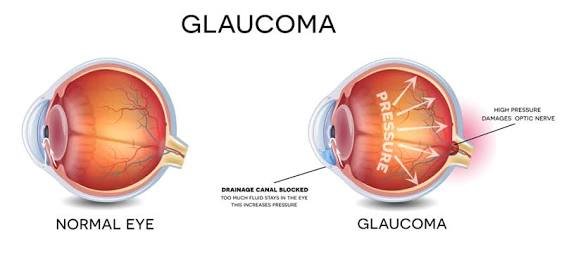
Types of Glaucoma
01
Open-Angle Glaucoma
The most common form. It usually develops gradually and may cause no early warning symptoms.
02
Angle-Closure Glaucoma
The drainage angle can become blocked. A sudden acute attack may cause severe pain, blurred vision and nausea.
03
Tension Glaucoma
Optic nerve damage can occur even when measured eye pressure is within the usual range.
04
Secondary Glaucoma
Glaucoma can develop due to another eye condition, injury, medication or previous surgery.
How Glaucoma Is Diagnosed
- Tonometry for eye pressure
- Visual field testing
- OCT imaging of optic nerve
- Optic nerve examination
- Gonioscopy of drainage angle
- Corneal thickness measurement
Glaucoma Treatment Options
01
Glaucoma Eye Drops
Prescription eye drops can reduce fluid production or improve drainage to lower intraocular pressure.
02
Angle-Closure Glaucoma
The drainage angle can become blocked. A sudden acute attack may cause severe pain, blurred vision and nausea.
03
Trabeculectomy
A filtering operation may be used when pressure is not adequately controlled with medicines or laser treatment.
04
Drainage Devices
Selected patients may require a glaucoma drainage implant such as Ahmed Glaucoma Valve (AGV) to help control eye pressure.
05
MIGS Procedures
Minimally Invasive Glaucoma Surgeries (MIGS) offer newer, less invasive approaches to lower eye pressure with faster recovery, suitable for selected patients depending on disease severity and eye anatomy.
06
Laser Iridotomy
In suitable angle-closure cases, laser treatment may create an opening in the iris to improve fluid movement.
Why Regular Follow-Up Matters
Glaucoma is usually a long-term condition. Treatment effectiveness must be monitored over time because eye pressure, visual fields and optic nerve appearance can change.
- Use eye drops exactly as prescribed
- Attend scheduled pressure checks
- Monitor optic nerve changes
- Do not stop treatment without advice
- Repeat visual field tests when advised
- Report medication side effects

Dr. Pallavee R. Goswami
MBBS, MS – Ophthalmology
Dr. Pallavee R. Goswami is an ophthalmologist and eye surgeon practicing in Gurgaon. Her public professional profiles list experience in cataract and phacoemulsification surgery, glaucoma management including trabeculectomy, Ahmed Glaucoma Valve (AGV) and MIGS, along with cornea and anterior segment fellowship training.
When Is Glaucoma an Emergency?
Sudden intense eye pain, a red eye, blurred vision, rainbow-coloured halos around lights, headache, nausea or vomiting may indicate acute angle closure. This requires urgent medical attention because vision can be damaged quickly.
Frequently Asked Questions
Glaucoma FAQs
Glaucoma is a group of eye diseases that damage the optic nerve. Without appropriate treatment, this damage can lead to progressive and permanent vision loss.
No. Some patients develop optic nerve damage despite eye pressure measurements being within the usual range.
Existing optic nerve damage generally cannot be reversed. Treatment focuses on lowering eye pressure and reducing the risk of further vision loss.
No. A comprehensive eye examination is required and may include optic nerve assessment, visual field testing, angle examination, OCT imaging and corneal thickness measurement.
Untreated or poorly controlled glaucoma can lead to severe vision loss. Early detection, consistent treatment and regular follow-up can reduce the risk of progression.
Many glaucoma medicines are prescribed for regular daily use. Follow the exact schedule given by your ophthalmologist.
Laser treatment may reduce eye pressure in suitable patients, but some people still need eye drops afterward.
Regular comprehensive eye examinations are especially important for people with a family history of glaucoma, elevated eye pressure, increasing age, previous eye injury, steroid use or other recognised risk factors.