
ICL Treatment in Gurgaon
Clear Vision Without Removing Your Natural Lens
ICL is an implantable lens-based vision correction option for selected patients who may not be ideal candidates for LASIK or other corneal laser procedures.

ICL Testing
Cornea, chamber depth & eye health
MBBS, MS Ophthalmology
Experienced eye specialist
Detailed Eye Evaluation
Diagnosis before treatment
Gurgaon Practice
Sohna Road & Sector 41
Eye Treatments
Concerned About Blurry Vision?
Schedule a detailed eye evaluation to understand whether cataract is affecting your vision and what treatment may be suitable.
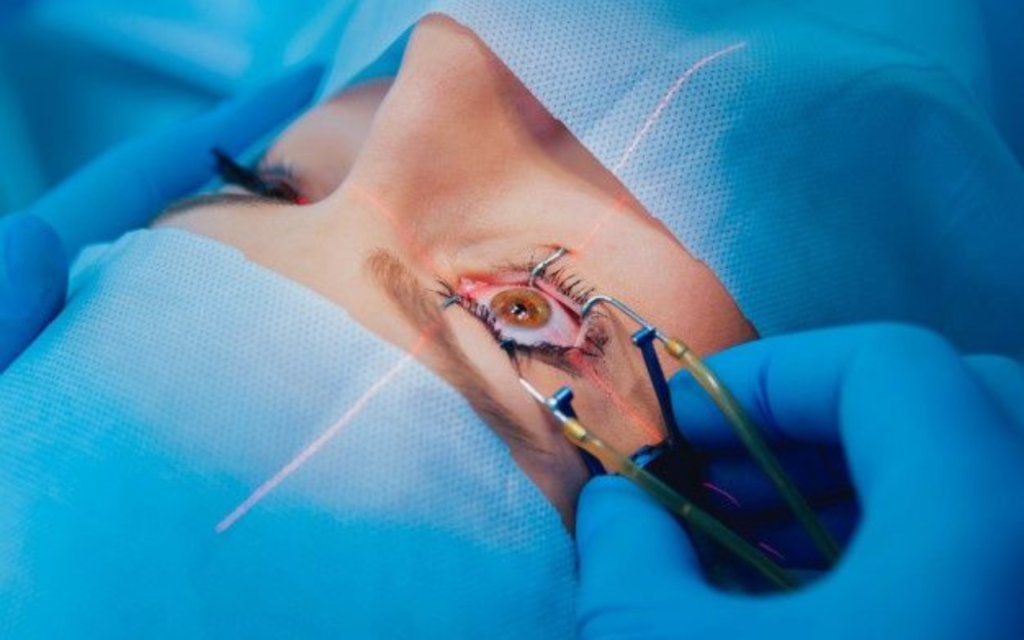
ICL Treatment in Gurgaon
ICL, or Implantable Collamer Lens, is a phakic intraocular lens placed inside the eye to correct refractive error while keeping the natural lens in place.
Unlike LASIK, ICL does not reshape the cornea. It may be considered for selected patients with moderate to high refractive errors, thinner corneas or other factors that make corneal laser treatment less suitable.
Important: ICL is an intraocular surgical procedure. Suitability depends on prescription stability, corneal health, anterior chamber measurements and overall eye health.
Who May Be Suitable for ICL?
ICL may suit selected patients based on prescription, corneal thickness and overall eye health.
- Stable spectacle prescription
- Healthy cornea
- Suitable anterior chamber depth
- No significant active eye disease
- Moderate to high refractive error
- Thin cornea not suitable for LASIK
- Adequate endothelial cell count
- Realistic expectations
Pre-ICL Evaluation
A detailed eye examination is required to confirm whether ICL is safe and suitable for you.
Refraction & Vision Test
Your prescription and best-corrected vision are measured carefully.
Corneal Assessment
Driving or seeing in low light may become increasingly difficult.
Eye Pressure
Intraocular pressure is checked before planning.
Retina & Eye Health
A complete eye examination may include retinal and optic nerve evaluation.
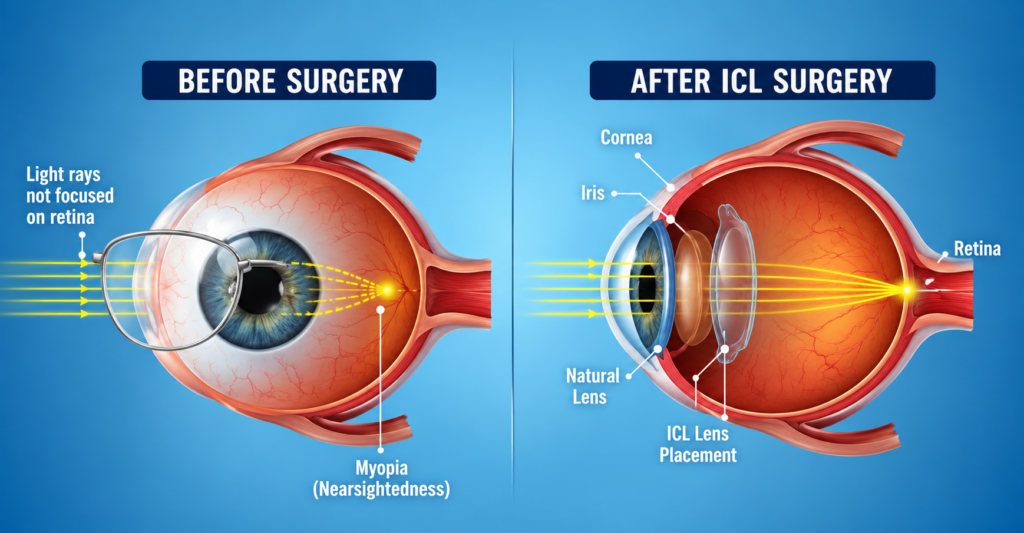
How ICL Surgery Works
The procedure involves placing a specially selected lens inside the eye through a small incision.
01
Eye Preparation
Numbing medicines are used as required.
02
Small Incision
A small incision is created at the front of the eye.
03
Lens Implantation
The foldable ICL is inserted and positioned inside the eye.
04
Final Check
Lens position and eye pressure are checked before follow-up.
ICL vs LASIK
Both procedures can reduce dependence on glasses, but they use different techniques and suit different eye conditions.
| Feature | ICL | LASIK |
|---|---|---|
| Method | Lens placed inside the eye | Cornea reshaped with laser |
| Corneal tissue removal | No | Yes |
| Natural lens | Remains in place | Remains in place |
| Thin corneas | May suit selected patients | May limit eligibility |
| Procedure type | Intraocular surgery | Corneal laser surgery |
Recovery After ICL
Most patients recover gradually with prescribed eye drops, activity precautions and regular follow-up.
Vision may improve relatively quickly, but recovery varies. Temporary blur, light sensitivity or mild discomfort can occur during early healing.
- Use prescribed eye drops
- Avoid strenuous activity initially
- Attend eye-pressure checks
- Avoid rubbing the eye
- Keep water and dust away
- Complete follow-up visits
Benefits of ICL
ICL can provide effective vision correction without removing corneal tissue in suitable patients.
- No corneal tissue removal
- May suit some thinner corneas
- Can reduce dependence on glasses
- May suit selected higher prescriptions
- Natural lens remains in place
- Good optical quality in suitable patients

Dr. Pallavee R. Goswami
MBBS, MS – Ophthalmology
Dr. Pallavee R. Goswami is an ophthalmologist and eye surgeon practicing in Gurgaon. Her public professional profiles list experience in cataract and phacoemulsification surgery, glaucoma care and cornea/anterior segment training.
Possible Risks & Complications
Like any eye surgery, ICL has potential risks that should be discussed before treatment.
Potential risks include infection, inflammation, increased eye pressure, glare or halos, lens position problems, cataract development, corneal endothelial cell loss and retinal complications. Some patients may require further treatment or additional surgery.
Frequently Asked Questions
ICL Treatment FAQs
ICL is an implantable lens placed inside the eye to correct refractive error while keeping the natural lens in place.
ICL may be suitable for selected patients with moderate to high refractive errors, thin corneas or those who may not be ideal candidates for LASIK.
Surgery is usually considered when cataract-related vision loss starts interfering with routine activities, safety, work or quality of life, or when your ophthalmologist finds another clinical reason to remove it.
No. LASIK reshapes the cornea using a laser, while ICL places a specially designed lens inside the eye.
No. The natural lens remains inside the eye during ICL surgery.
Yes. In suitable patients, ICL can significantly reduce dependence on glasses or contact lenses.
ICL may be considered for selected patients with higher refractive errors, depending on eye measurements and overall eye health.
Some patients with thin corneas who are not suitable for LASIK may be considered for ICL after a detailed eye evaluation.
Numbing medicines are used during the procedure. Mild discomfort or irritation may occur during early recovery.
The procedure is generally completed within a short period, but the total time at the clinic may be longer due to preparation and postoperative checks.